
Bank reconciliation
Feeds from Singapore banks
Transactions matched to invoices and expenses, with anything unclear parked in a visible queue.
Talk to the team

Dovaskin keeps GST filing, bank feeds, payroll and IRAS-ready reporting in one hosted system, set up and supported by a Singapore team that handles the implementation with you.
No installation on each office machine. Your chart of accounts, transaction history and filing records sit in one hosted place that a director, an admin and an external accountant can all open.
Cloud accounting means your ledgers, invoices and reconciliation live in a hosted system you reach through a browser, not on one office PC. For a Singapore SME that matters because GST returns and audit files are date-bound: if the bookkeeper is on leave, the work still has to be reachable.
Nothing here requires you to install software on each machine. Dovaskin keeps the chart of accounts, transaction history and filing records in one place, so everyone works from the same set of numbers rather than three versions of the same spreadsheet.
Most Singapore finance teams come to cloud accounting for a narrow set of tasks, and we keep those front and centre. Each one is a workflow with a beginning and an end, not a dashboard you stare at.
Feeds from Singapore banks
Transactions matched to invoices and expenses, with anything unclear parked in a visible queue.
Built from posted entries
Figures drawn from the ledger rather than a spreadsheet someone maintains by hand each quarter.
CPF carried with the ledger
Employer CPF and employee deductions post straight into the accounts, with no separate journal.
Structured for review
Generated in a format your accountant or IRAS can work from, without reformatting first.
The point is to close the month and file on time. If you want the full workflow detail, the Features page walks through each of these in turn.
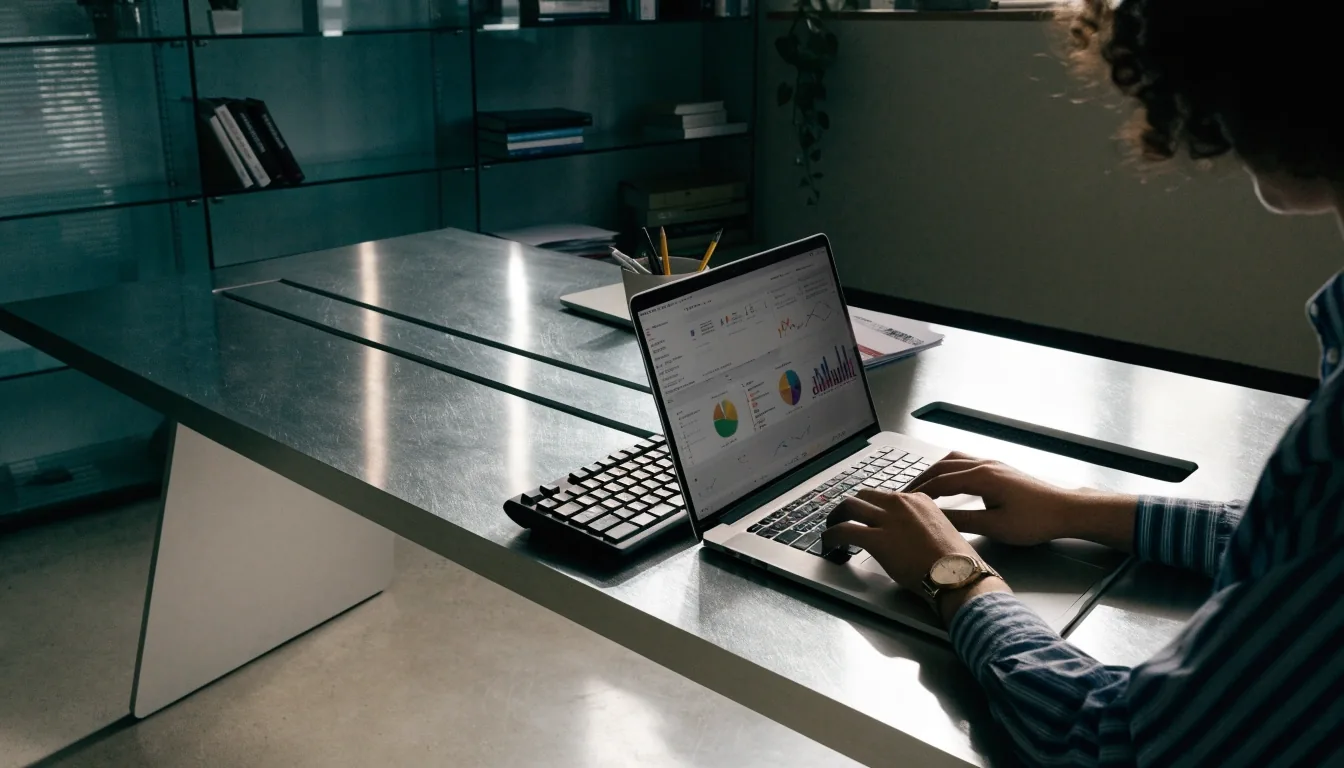
GST F5 returns are where small Singapore businesses lose the most time, usually because the sales figures sit in one tool and the input tax in another. Dovaskin keeps GST treatment on the transaction itself, so a standard-rated sale, a zero-rated export and an out-of-scope item stay distinguishable when the return is assembled.
When you prepare the F5, the platform pulls from posted entries rather than a spreadsheet someone maintains by hand. Your accountant can review the same return before it goes to IRAS, and the working papers stay attached to the period they belong to.
Explore GST filing featuresA bank feed is only useful if it saves keystrokes. Dovaskin connects to your Singapore business accounts, brings transactions in, and lets you match them against invoices, expenses or a rule you set once.
Recurring items, like a monthly software subscription or a rental debit, can be coded automatically after the first match. Anything that does not match cleanly stays in the reconciliation queue where you can see it, rather than disappearing into a suspense account.
During onboarding we confirm which of your accounts connect automatically and which need a statement import.
Payroll in Singapore is not just salaries: it is CPF contributions, employee records, and the employment paperwork MOM expects to be in order. Dovaskin handles payroll runs that post straight into the ledger, so wage cost, employer CPF and employee deductions land in the accounts without a separate journal.
Employee data is held against the payroll record, which makes it easier to produce the figures an accountant or auditor asks for later. If you already use an external payroll bureau, the platform can still hold the resulting entries.
"IRAS-ready" is a specific claim, not a slogan. It means the platform can produce the audit file format IRAS expects when it asks for your accounting data, with transactions, accounts and tax codes structured the way the file standard requires.
For day-to-day work, the same data drives your management reports: profit and loss, balance sheet, aged receivables and GST summaries. You should not have to export to a spreadsheet and reformat before a filing.
A good fit
Where it fits less well
If either applies, the contact form is still the fastest way to get a straight answer on fit before you commit to anything.
Onboarding starts with a scoping call: which accounting tool you are leaving, how many bank accounts, whether payroll is in scope, and who will use the system day to day.
From there we map your existing chart of accounts into the platform, import opening balances and historical transactions, connect bank feeds, and run a parallel check against your last filed period. Training is hands-on, aimed at the person who will actually post entries.
Read the implementation guideScoping call
Current tool, bank accounts, payroll scope, and the people who will use the system.
Chart of accounts mapped
Your existing structure is rebuilt in the platform so reports still make sense to your accountant.
Balances and history imported
Opening balances and historical transactions come across, then feeds are connected.
Parallel check and training
We run the numbers against your last filed period, then train the person posting entries.
The support model matches how Singapore SMEs actually work: an email or phone line to the team that did your setup, not a ticket queue in another timezone. Questions that come up in the first GST cycle are common, and we treat the first filing as part of onboarding rather than a separate engagement.
Over time, most clients move to a lighter support arrangement once the workflows are routine. If your needs change, say you add a second entity or bring payroll in-house, that is a conversation with the same team.
Business phone
+65 6227 8752Hours
Monday to Friday, 9:00 AM – 6:00 PM SGT
Office
71 Robinson Road, #14-01, Singapore 068895
Dovaskin is operated by Cloud Accounting & Consultancy Pte. Ltd., a Singapore-registered company. If you want to check fit before committing to anything, the contact form is the fastest route. The About page covers the team and the company background in more detail.
Corporate registration
Operated by Cloud Accounting & Consultancy Pte. Ltd.
71 Robinson Road, #14-01, Singapore 068895
Business phone +65 6227 8752
Tell us what you use now and what you need. We will come back with a straight answer on scope, and there is no obligation to proceed.
Yes. GST treatment is set on each transaction, and the F5 return is assembled from posted entries so you are not reconciling a separate spreadsheet before filing.
Dovaskin connects to business accounts at the major Singapore banks. During onboarding we confirm which of your accounts can be connected automatically and which will need a statement import.
Payroll is available as part of the platform, and runs post into the ledger with employer CPF and employee deductions included, so you avoid a manual journal each month.
We import opening balances and historical transactions from your existing tool during implementation, then run a check against your last filed period before you go live.
Support comes from the same Singapore-based team that handles your implementation. Contact details, including a business phone number, are on the Contact page and in the site footer.
A demo walks through the actual workflows on real transaction shapes: bank feeds coming in, GST treatment set on an entry, a payroll run posting to the ledger, and the audit file produced at the end. Bring your current chart of accounts and we will map it live.
Prefer to talk it through first? Call +65 6227 8752 or email [email protected] during business hours, Monday to Friday, 9:00 AM – 6:00 PM SGT.